
Showing posts with label green. Show all posts
Showing posts with label green. Show all posts
Tuesday, July 30, 2019


Tuesday, June 20, 2017

Tuesday, June 04, 2013
dystopia is on the march
From the ever entertaining yet thought-provoking @FearDept
https://twitter.com/FearDept/status/341777394459365377
 |
Tuesday, February 26, 2013
Maybe GMO seeds are not all that?

An article in Grist questions the actual improvements due to the use of GMO seeds. http://grist.org/article/gmo-fail-monsanto-foiled-by-feds-supreme-court-and-science/
But GMOs took the biggest punch this week from academia: Tom Philpott highlights a USDA-funded study [PDF] by University of Wisconsin scientists who found that several types of GMO seeds (including Monsanto’s RoundUp Ready varieties) actually produce a lower yield than conventional seeds. Only one seed — a corn that produces its own pesticide to combat the corn borer — offers any significant yield benefit. In other words, planting most genetically modified seeds results in less harvest per acre than planting non-genetically modified seeds.Its worth following the links on this, the study seems credible. Nothing is black and white, I expect there are cases where a GMO product may be beneficial to crop yields, particularly in the short-term, at least maybe. But what is certain is that the large seed companies patenting these technologies, and using interlocking product strategies that Microsoft would be proud of, stand to make a lot of money. Corner the market on food production with a patent strategy, anyone? Queue the efforts to discredit the study.
Tuesday, January 08, 2013
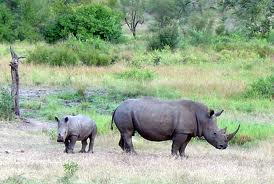
why are species endangered?

Its also heartening to see technology being applied to help address the problem, for example, drones being deployed to help save white rhinos - http://www.forbes.com/sites/alexknapp/2012/12/23/crowdfunded-drones-could-save-white-rhinos-from-extinction/
I'm happy to see continued investment on the robotics/AI front, but I very much want to see increased focus and investment to help make sure we minimize the losses in our natural world. Every loss is poignant and I believe future generations will be aghast at what we're allowing to happen. Even if the wild dreams of science fiction come true and we can re-create lost life in the future, what is happening now, especially at our hands, is shameful.
Wednesday, April 20, 2011
solar energy technology and Moore's Law
I've been trying to understand theoretical maximums, etc.. for solar energy. This article by Ramez Naam in O'Reilly Radar captures a lot of what I am in interested in learning.
See: http://radar.oreilly.com/2011/04/solar-power-moores-law.html Apparently this article was originally in Scientific American.
Valuable snippet:
Anyone really good with maps mashups? Given a Google map of a particular location, calculate and display theoretical max energy from sunlight. Maybe, given appropriate weather table data this would be an application for Fusion Tables. Any takers? Or perhaps someone has already done this. If only I had any free time at all....
See: http://radar.oreilly.com/2011/04/solar-power-moores-law.html Apparently this article was originally in Scientific American.
Valuable snippet:
The sun strikes every square meter of our planet with more than 1,360 watts of power. Half of that energy is absorbed by the atmosphere or reflected back into space. Seven hundred watts of power, on average, reaches Earth's surface. Summed across the half of the Earth that the sun is shining on, that is 89 petawatts of power. By comparison, all of human civilization uses around 15 terrawatts of power, or one six-thousandth as much. In 14 and a half seconds, the sun provides as much energy to Earth as humanity uses in a day.I'd like to understand more about the impact of latitude and weather on the theoretical maximum in any particular location. Latitude changes mean changes in angle of sunlight, affecting energy density I suppose. Also, average cloud cover in a particular location obviously makes a big difference.
Anyone really good with maps mashups? Given a Google map of a particular location, calculate and display theoretical max energy from sunlight. Maybe, given appropriate weather table data this would be an application for Fusion Tables. Any takers? Or perhaps someone has already done this. If only I had any free time at all....
Wednesday, August 04, 2010
Boston Globe on Fisher Cats

Friday, September 05, 2008

Saturday, August 09, 2008
MIT report on future of transportation
with comprehensive focus on automotive technology choices. very helpful in understanding the different characteristics of different types of engine technologies.
report here: Fueling our Transportation Future
money quote from the summary:
report here: Fueling our Transportation Future
money quote from the summary:
"We have concluded that a 30–50% reduction in fuel consumption is feasible over the next
30 years. In the short-term, this will come as a result of improved gasoline and diesel engines
and transmissions, gasoline hybrids, and reductions in vehicle weight and drag. If these
improvements are achieved, we estimate a $1,500–$4,500 increase in vehicle costs. Over the
longer term, plug-in hybrids and later still, hydrogen fuel cells may enter the fleet in numbers
sufficient to have significant an impact on fuel use and emissions."
Wednesday, July 23, 2008
Pickens on energy independence
The Speculist embeds this video outlining T. Boone Pickens plan for US energy independence. I'm not so sure independance is the key factor, but developing multiple scalable alternatives to oil and other caron-based energy sources is nothing but a good idea.
Tuesday, June 03, 2008
Freeman Dyson on The Question of Global Warming
Freeman Dyson discusses the subject of global warming as covered in two books in this review in The New York Review of Books.
Freeman Dyson is scary smart, clear thinking, and expresses himself logically. I find it useful to pay attention to him because he provides insight lacking in conventional opinion. I recommend reading the article.
Updates: On the political scene:
On this last point - seems to me you can do the science and then have a healthy political and/or policy debate regarding what to do about the scientific results. If the scientific results are in error or have bias, other scientists will delight in exposing the problem. Something about scientific method and inquiry and all that. If you allow politicians to determine scientific results; well, then you have Lysenkoism.
Freeman Dyson is scary smart, clear thinking, and expresses himself logically. I find it useful to pay attention to him because he provides insight lacking in conventional opinion. I recommend reading the article.
Updates: On the political scene:
Global warming bill faces stiff GOP opposition
and,
NASA watchdog says press office distorted climate studies
On this last point - seems to me you can do the science and then have a healthy political and/or policy debate regarding what to do about the scientific results. If the scientific results are in error or have bias, other scientists will delight in exposing the problem. Something about scientific method and inquiry and all that. If you allow politicians to determine scientific results; well, then you have Lysenkoism.
Wednesday, April 30, 2008
ethanol
Is ethanol the answer? I think not, and not just because of the food vs fuel dynamic, as described here in the Washington Post: Siphoning Off Corn to Fuel Our Cars.
This column in the New York Sun by Harold Furchtgott-Roth offers useful links explaining why ethanol is not the answer.
So, probably corn-based ethanol is not the direction we should be taking for fuel diversity and supply.
We can talk about corn monoculture in another post...
This column in the New York Sun by Harold Furchtgott-Roth offers useful links explaining why ethanol is not the answer.
So, probably corn-based ethanol is not the direction we should be taking for fuel diversity and supply.
We can talk about corn monoculture in another post...
Tuesday, April 22, 2008
from RWW: 15 of the Best Green Search Engines
The ever interesting ReadWriteWeb lists 15 Green Search engines.
There are a lot of ways one could imagine a green search engine would function, or add value, and many of them are represented here.
There are a lot of ways one could imagine a green search engine would function, or add value, and many of them are represented here.
Thursday, April 10, 2008
energy not growing on trees
A good perspective from a scientist on the biofuels conundrum.
Seems to me the biofuel debate will get muddied by the political issues associated with agribusiness.
I do enjoy Cosmic Variance, albeit as a layman.
Seems to me the biofuel debate will get muddied by the political issues associated with agribusiness.
I do enjoy Cosmic Variance, albeit as a layman.
Tuesday, November 20, 2007
"More Evidence We've Entered the End of Oil"
More Evidence We've Entered the End of Oil is a posting in WIRED's blog network that discusses the end of oil meme in the context of an article in the Wall Street Journal.
Seems to me in addition to the geo-data about quantities of recoverable oil, there is also the psycho-data that indicates human institutions are starting to formulate what a post-oil world might look like. This is a significant step, in my opinion, in bringing about change. I assume the rate of chance will be non-linear, and that over time, perhaps less time than we imagine, the momentum of non-oil energy sources in the market will increase significantly.
Seems to me in addition to the geo-data about quantities of recoverable oil, there is also the psycho-data that indicates human institutions are starting to formulate what a post-oil world might look like. This is a significant step, in my opinion, in bringing about change. I assume the rate of chance will be non-linear, and that over time, perhaps less time than we imagine, the momentum of non-oil energy sources in the market will increase significantly.
Monday, November 12, 2007
more on VCs tackle green
from CNN Money, an article focused on Al Gore getting hands-on with the VC community in their efforts to marshal entrepreneurial efforts to turn energy problems into energy opportunities. In my opinion, this is worth reading - as I've noted before, unleashing our economic system can address environmental problems and create wealth.
see: Al Gore's next act: Planet-saving VC
relevant snippet:
however, the catch:
Read the article!
see: Al Gore's next act: Planet-saving VC
relevant snippet:
According to Doerr, by 2009 more than a third of Kleiner's latest fund, which was raised in 2006 and totals $600 million, will be invested in technologies that aim to reduce emissions of carbon dioxide. Already Kleiner has invested more than $270 million from various funds in 26 companies that make everything from microbes that scrub old oil wells to electric cars to noncorn ethanol. Twelve of Kleiner's 22 partners now spend some or all of their time on green investments.
however, the catch:
There is, however, one thing standing in their way. Five years after Kleiner Perkins made its first green investment, the firm hasn't had one "exit" -- VC-speak for an IPO or a sale of a company that validates the investment thesis. Doerr equates this moment to Internet investing (which he famously called "the greatest legal creation of wealth in the history of the planet") before Kleiner took a certain search engine public in 1995. Now, he wonders, "what's the company that will lead the boom? What's the Netscape of green innovation?"
Read the article!
Thursday, June 21, 2007
now taking Smart reservations!
"Coming to the USA in 2008"
Not so sure its just right for where we live, but I'm keeping my eye on the Smart fourtwo.
Not so sure its just right for where we live, but I'm keeping my eye on the Smart fourtwo.
Wednesday, June 13, 2007
Climate Savers Computing Initiative
So this is a good idea, and overdue. The fruits of green computing could be considerable, not to mention lowering my utility bill.
Thursday, May 31, 2007
John Doerr: Seeking salvation and profit in greentech
Great talk (18 minute video) by John Doerr at TED regarding greentech; no doubt this is heartfelt and compelling. From the TED site:
"I don't think we're going to make it," John Doerr proclaims, in an emotional talk about climate change and investment. Spurred on by his daughter, who demanded he fix the mess the world is heading for, he and his partners at Kleiner Perkins Caufield & Byers embarked on a greentech world tour -- surveying the state of the art, from the ethanol revolution in Brazil to Wal-mart's (!) eco-concept store in Bentonville, Arkansas. KPCB is investing $200 million in green technologies to save the planet and make a profit to boot. But, Doerr fears, it may not be enough.
Monday, May 28, 2007
How to Talk to a Climate Skeptic
Thanks to Grist, here is a collection of information which can be used to refute refuters.
I know there is a strong emphasis on the right-hand side of the political spectrum to debunk global warming, apparently because they see it as a liberal or big government attack on free markets and capitalism. It seems to me that global warming, while threatening, is also a fantastic opportunity for entrepreneurs and our free market economy to address the problem in ways that help grow the economy. And it seems to me that many small and large players in the market are taking this view, as previously blogged. Hmmm...
I know there is a strong emphasis on the right-hand side of the political spectrum to debunk global warming, apparently because they see it as a liberal or big government attack on free markets and capitalism. It seems to me that global warming, while threatening, is also a fantastic opportunity for entrepreneurs and our free market economy to address the problem in ways that help grow the economy. And it seems to me that many small and large players in the market are taking this view, as previously blogged. Hmmm...
Subscribe to:
Posts (Atom)