Showing posts with label policy. Show all posts

Wednesday, December 30, 2015

labor, work, and higher education

Here is an interesting look at worker's compensation:
https://www.propublica.org/article/workers-comp-conferences-expos-and-middlemen

It seems in the middle of the 20th century or so we set about putting together systems and programs that solved problems, and we were reasonably sincere about it, and some of those programs worked reasonably well, for example to educate people, to alleviate poverty at least a bit and especially to address the denial of opportunity to non-white people. Ever since the 80s or so, we've done our best to subvert and divert those programs back to rewarding the wealthy and powerful and away from their original purpose. Very effectively it would seem.

In particular, we seem to be getting very good at abstracting processes so the economic inputs get soaked up by the administrators of various programs.  In other words, the people who can abstract the process or program - hike it up one level of abstraction by focusing on the middlemen or managers of the process - capture the gains.

Another example is higher education - when the economy boomed education got more expensive but people could afford it because the economy was expanding, jobs were available, and education was seen as a public good and thus a good use of public money. It seems in many cases much of the additional cost went to additional layers of administration. In the current time of economic retrenching, austerity, and a dim view of public financing of education, we frequently cut academic department and keep the administrative layers, generally, because admins are powerful.

For tech people, there is one silver lining - the gold rush of patentable innovation keeps many research labs at universities at least reasonably afloat. Meet the workforce needs and all that! But the dream of a good quality higher education for all who want it recedes at a time of greatest need. 

Education and workman's comp are somewhat related - workers are under great pressure: not just workman's comp is diminished, but unions have been weakened and as a result, worker protections have also weakened. Additionally, workers have lost economic power because of globalization's explicit expansion of the workforce and concomitant wage competition, and now workers face, finally, the prospect of many types of jobs disappearing forever due to the cruel/beneficent and ever-increasing capability of automation and AI to become more and more effective. (Any wonder income and wealth inequality has skyrocketed?) We need an excellent education system, and not one narrowly vocationally focused because, first, technical skill requirements are starting to evolve faster than people can be retrained in them, and second, because in a time of great change, we need people prepared to think unusually creatively about how they can sustain themselves, and thrive and participate in defining the new society that is emerging.

More on many of these topics in the future, for sure. 


many thanks to ryanlerch (librarian) for the clipart. https://openclipart.org/user-detail/ryanlerch

Wednesday, May 28, 2014

Capitalism, Hijacked by Finance?

I stumbled on this 25 minute video recorded last year in South Africa. Clayton Christensen discusses how the cycle of innovation may have been interrupted, contributing to jobless recoveries.

In my opinion, add this analysis to those of Piketty's Capital in 21st Century and Brynjolfsson & McAfee's Second Machine Age when trying to understand the issues we face with employment and inequality.

I guess one overly-simplistic takeaway could be: you get what you measure, so be careful what you measure. More importantly, this suggests, as other analysis seems to as well, that capitalism has been hijacked by finance (and financiers, I suppose) resulting in sub-optimal outcomes, unless you're in finance. The role of capitalism in society is vitally important, and we need to find analysis and vocabulary to help us make policy and political decisions that make sure capitalism is generative, not extractive.


Friday, December 13, 2013

feed the oligarchs, see what happens

this quote:
'He is referring to the 2012 book Why Nations Fail: The Origins of Power, Prosperity, and Poverty, in which economist Daron Acemoglu, of the Massachusetts Institute of Technology, argues that societies fail when they move from an inclusive to an extractive economy, meaning an economy “designed to extract incomes and wealth from one subset of society (the masses) to benefit a different subset (the governing elite).”'
from: http://www.thestar.com/news/atkinsonseries/2013/12/13/the_incredible_disappearing_middle_class.html, via: @sarahkendzir

image thanks to: http://economyincrisis.org/content/america-is-caught-in-a-vicious-downward-cycle


Saturday, March 16, 2013

Military Spending - Leading Nations


This is evocative.  Data from 2007. Would be interesting to see updated post-Great Recession data.

Thanks to Lindsey Bieda on Twitter: @lindseybieda, original: https://twitter.com/lindseybieda/status/312943374359478272

Friday, March 15, 2013

Long Life and Inequality

As healthy life extension becomes more prevalent, societal consequences are more visible.

Financial Planners have talked about longevity risk - where people outlive their retirement savings because life extension blew through the accounting parameters.  A new consequence is arising because healthy life extension is unevenly distributed, currently by income. Poorer people will pay into social security for benefits they may never receive because life extension is skewed towards the better off.  So, poorer people will pay to fund the retirements of the wealthy. The Economist explains: http://www.economist.com/blogs/democracyinamerica/2013/03/wealth-inequality?fsrc=scn/tw/te/bl/yourmoneyyourlife


photo tnx to: http://www.voxxi.com/life-expectancy-70-new-30/

Tuesday, January 08, 2013

why are species endangered?

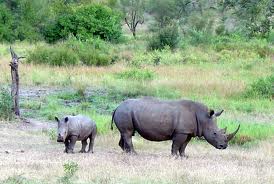
Its a disappointment-filled irony that we are investing so much in research on artificial intelligence, robotics, and similar technologies while watching species, including "charismatic megafauna", become so endangered.

Its also heartening to see technology being applied to help address the problem, for example, drones being deployed to help save white rhinos - http://www.forbes.com/sites/alexknapp/2012/12/23/crowdfunded-drones-could-save-white-rhinos-from-extinction/

I'm happy to see continued investment on the robotics/AI front, but I very much want to see increased focus and investment to help make sure we minimize the losses in our natural world.  Every loss is poignant and I believe future generations will be aghast at what we're allowing to happen.   Even if the wild dreams of science fiction come true and we can re-create lost life in the future, what is happening now, especially at our hands, is shameful.

Tuesday, December 11, 2012

patenting seeds?


Good overview article by Carey Gilliam in Reuters about an upcoming court case regarding seed patents.

http://www.reuters.com/article/2012/12/10/us-monsanto-lawsuit-idUSBRE8B917T20121210

I'm all for protecting innovation, but I'm not so much for using the patent system to leverage innovation protection into non-competitive market dominance or oppression. There are real policy issues: food policy, farm policy, food safety, as well as intellectual property policy.  I hope the path forward incorporates all the considerations that affect the economic health of society, and not just considerations of intellectual property maximization designed to benefit the incumbent biggest corporations.  Just sayin'

Thanks to the interwebs for a photo of seeds.